



NepalIsrael.com auto goggle feed

Despite deep cuts inflicted by the United States and Israel on the Iranian regime, Tehran continues to launch waves of attacks across the region.
In June last year, Israel launched a surprise attack on Iran that destroyed parts of its nuclear program, severely damaged missile production sites and killed key military commanders.
Though suffering heavy losses, satellite imagery analysis showed that Iran has rebuilt damaged missile facilities and was rapidly fortifying several of its nuclear facilities.
The death of Iran’s supreme leader in US and Israeli airstrikes is a clear victory for the two allies, but much uncertainty lies ahead.
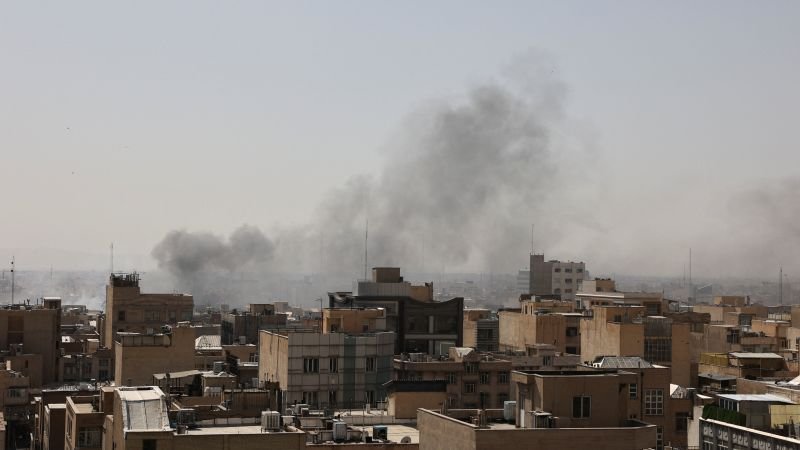
While the US and Israel claim highly successful strikes at a range of Iranian targets, including eliminating other key leaders, analysts note only a few independent satellite images of damage in Iran have been seen so far, including those that show the destruction of the supreme leader’s compound and others that show a cloud of black smoke rising over a docked Iranian warship.
Some suggest it will take at least 48 hours to get solid information – and more satellite photo evidence – on how successful the first day of US-Israeli strikes were.
The lack of independent evidence of the destruction of Iran’s missile forces leaves open to question how much firepower Tehran still has in its arsenal.
While it has struck back against a range of targets across the Middle East since the conflict began – hundreds of ballistic missiles and more than a thousand drones by some accounts – analysts note that in last summer’s 12-day war with Israel, Iran held off using much of its inventory of missiles and drones until later in the conflict.
Iran strikes back: There was a hint of this early Sunday as Iran said it was launching a fresh wave attacks across the region, with Dubai, Bahrain, Abu Dhabi, Qatar and Israel reporting incoming Iranian munitions throughout the morning.
Video of Iranian counterattacks since the combat began shows a large volume of missile interceptors being used in targeted countries like Israel, the UAE and Bahrain.
Stockpiles: The US and Israel in particular used huge quantities of their limited and hard-to-replace air defense interceptors in the 12-day war last summer, there are doubts about how long current stocks will last if Iran still has ballistic missiles and drones in reserve for an extended conflict.
The post”Live updates: Iran’s Supreme Leader Ayatollah Ali Khamenei killed in US-Israeli strikes” is auto generated by Nepalisrael.com’s Auto feed for the information purpose. [/gpt3]
