



NepalIsrael.com auto goggle feed
In light of the increasing tensions between the U.S. and Iran, the expanding American regional military presence, and the talk of potential U.S. strikes as early as tomorrow, I thought I might check in on some Iranian air defense sites I have been keeping an eye on.
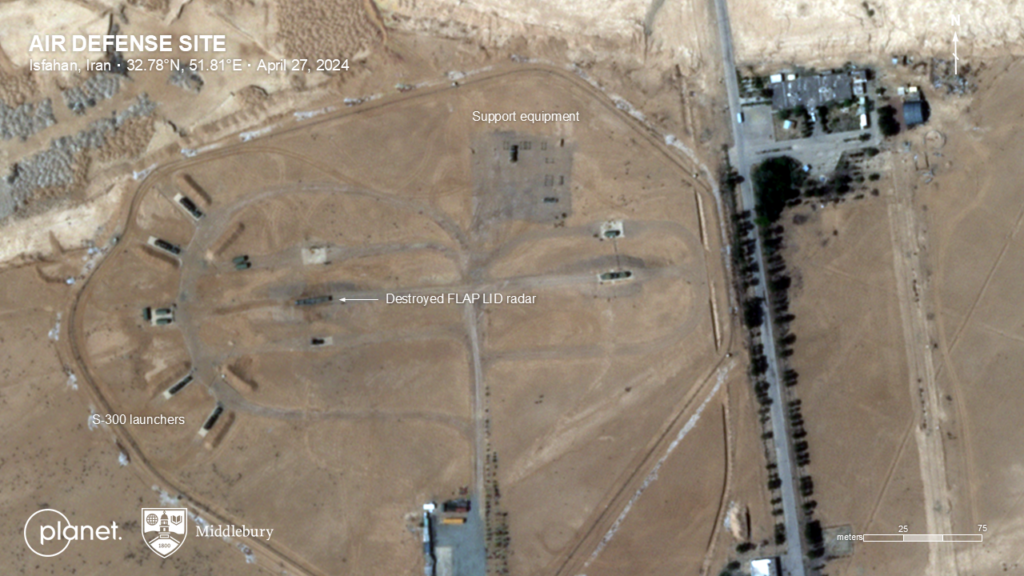
One of the common talking points since the Israeli retaliation for True Promise I & II and the 12-Day war is that all Iran’s S-300 systems have been destroyed. What this means is not entirely clear from the official comments. Reporting usually consists of some statement along the lines of “A senior U.S. official confirmed the airstrikes took out the three S-300 missile systems.” However, what is not specified in the remarks is whether that means all the launchers were destroyed, or merely some of the radars. The most specific of these reports was the New York Times description of the destruction of a FLAP LID radar at the Isfahan S-300 site after the Israeli retaliation for True Promise I in late April 2024.
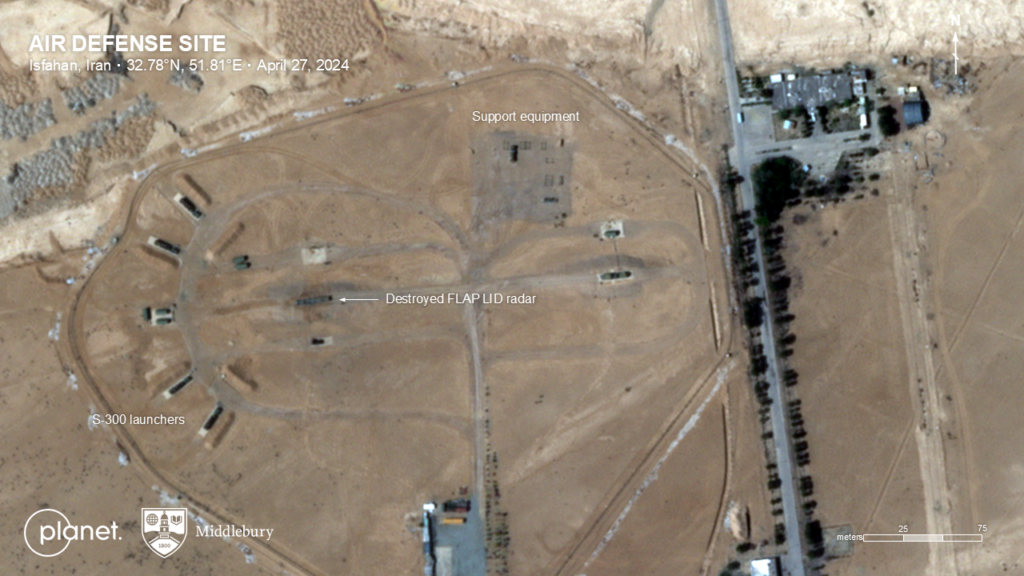
Clearly the FLAP LID tracking and engagement radar for the S-300 had been destroyed, but the launchers and much of the support equipment was still intact. Whether the battery could still operate after the strike, I don’t know. Nicole Grajewski reported that an S-300 was shown launching a SAM using an Iranian radar in February 2025. Nicole’s observation was that whether or not this was an operational capability, the Iranians clearly wanted to signal their S-300s were still operational.
Yet, after those Israeli strikes in October of 2024, the S-300 sites across Iran emptied out. I couldn’t find any launchers at former S-300 sites before the 12-Day War broke out, as I told the Financial Times at the time. Those systems, along with Iranian air defenses in general, were more or less absent during the war, speaking to the capabilities of the U.S. and Israeli aircraft and the weaknesses of their air defense network.
Well, it looks like some of those S-300 launchers have reemerged. Thanks to images from our partners at Planet Labs and Airbus, we have some nice images showing what appears to be S-300 launchers at some air defense sites around Tehran.
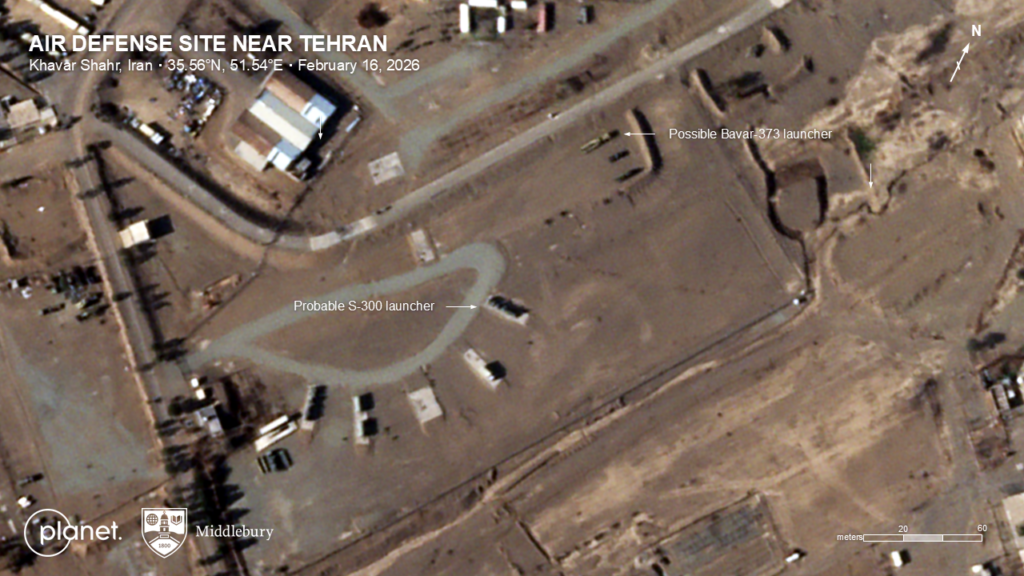
The launcher seen here is about 15-16 meters, the same length as the S-300 launchers previously seen at the site outside of Isfahan. Akin to what Nicole observed, there also seems to be a domestic Iranian SAM launcher there, perhaps a Bavar-373. If this is an operational site, the Iranians are trying to mix and match their remaining systems.
A little to the west there is another air defense site where I found another S-300 launcher.
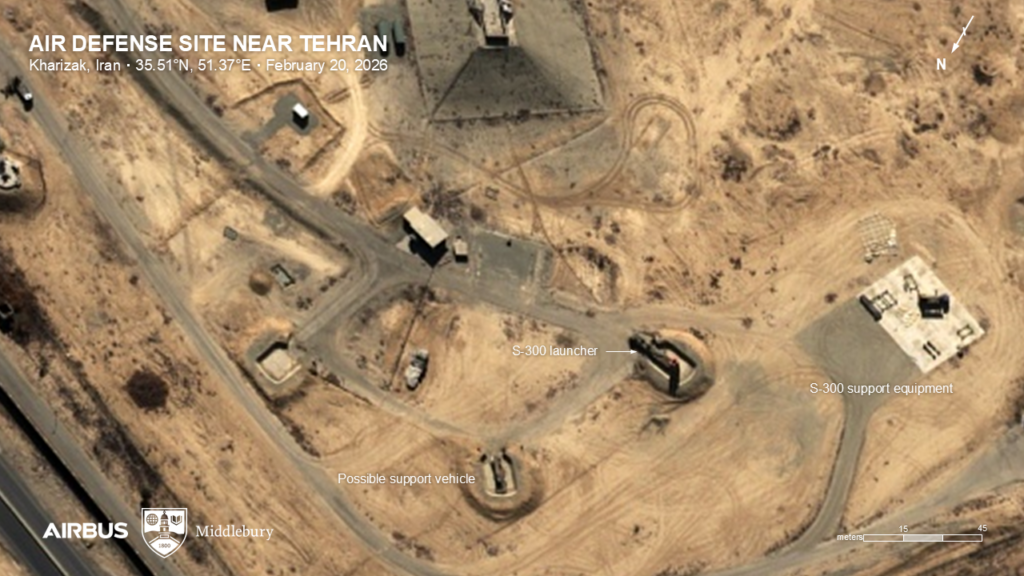
Since the system was erected, it was much easier to identify, along with some of the support equipment seen at operational S-300 sites like the one near Isfahan.
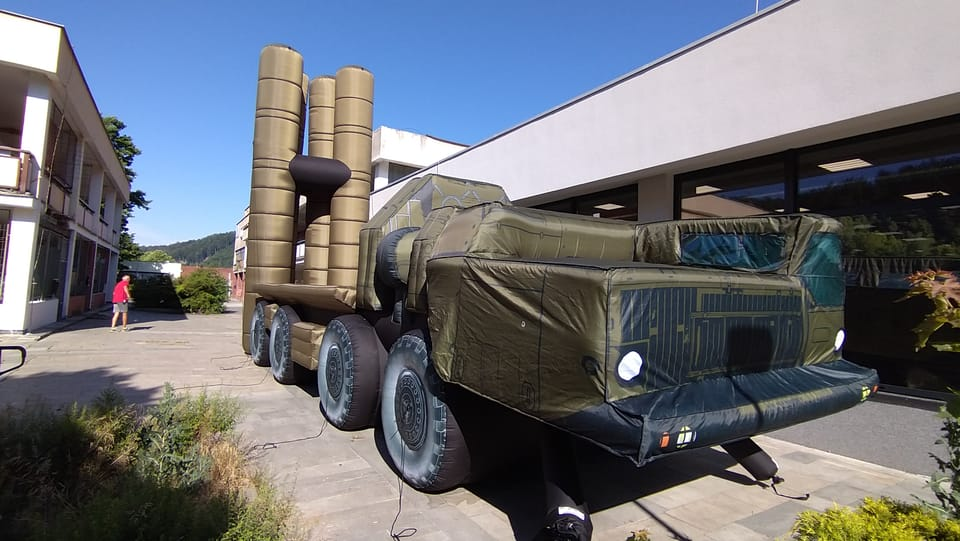
One caveat is that these could be decoys, either inflatable or otherwise, intended to fool American and Israeli analysts. An inflatable or wooden decoy would look different in SAR imagery if anyone is so inclined to check.
Notably absent from both sites are the radars associated with the S-300. While the Iranians may have been able to engineer a workaround using domestic radars, I doubt the performance is equal to the Russian radars designed to work with the system. So even though it looks like Iran does still possess some S-300 launchers, contrary to popular belief, and is deploying them at air defense sites, their capabilities are probably degraded. Considering the ease with which the Israelis were able to target and destroy them in October 2024, that bodes ill for Iranian air defenses if conflict were to break out.
Finally, last May Jeffrey and I observed that Iran’s air defense systems were poorly integrated, and were therefore susceptible to evasion and disruption, even at their most sensitive nuclear sites. Something I saw at Isfahan suggests what might be a… novel potential approach to trying to solve that problem.
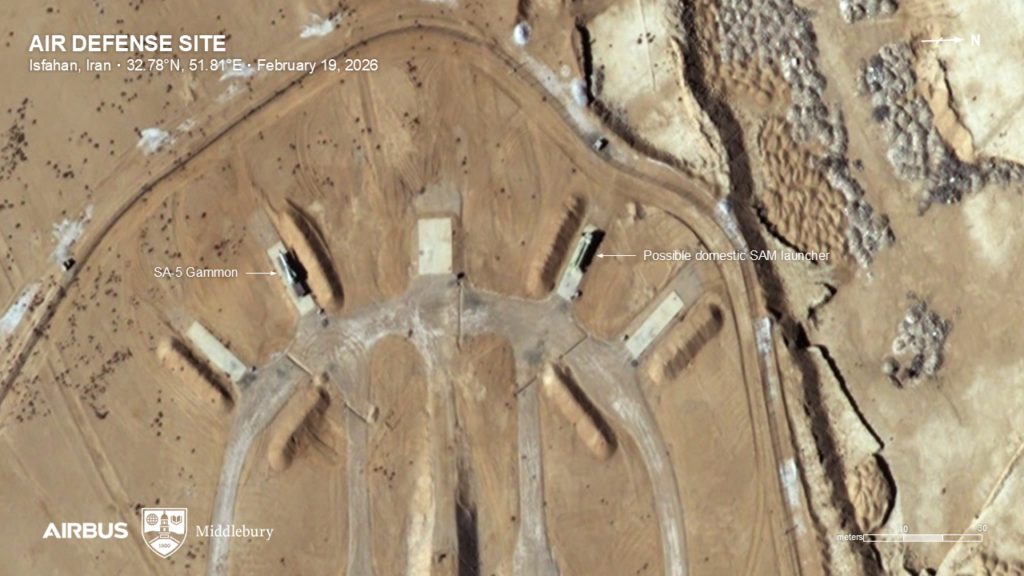
Stationing a SA-5 and a domestic SAM system, perhaps a Khordad-15, together is probably not the best way to solve your air defense integration problems. As a wise man once said, sometimes you go to war with the integrated air defense you have, not the one you wish you had. I’d prefer to not find out whether this particular type of air defense alchemy works and have it remain an unknown unknown. We shall see.
The post”Whither the Iranian S-300?” is auto generated by Nepalisrael.com’s Auto feed for the information purpose. [/gpt3]
