




NepalIsrael.com auto goggle feed
The government’s refusal to formulate an enforcement plan for drafting ultra-Orthodox men, in defiance of a ruling by the High Court of Justice, places Israel before an unprecedented crisis. The Court faces only bad options—but it may have no choice other than to step into the shoes of the executive branch and move toward active enforcement.
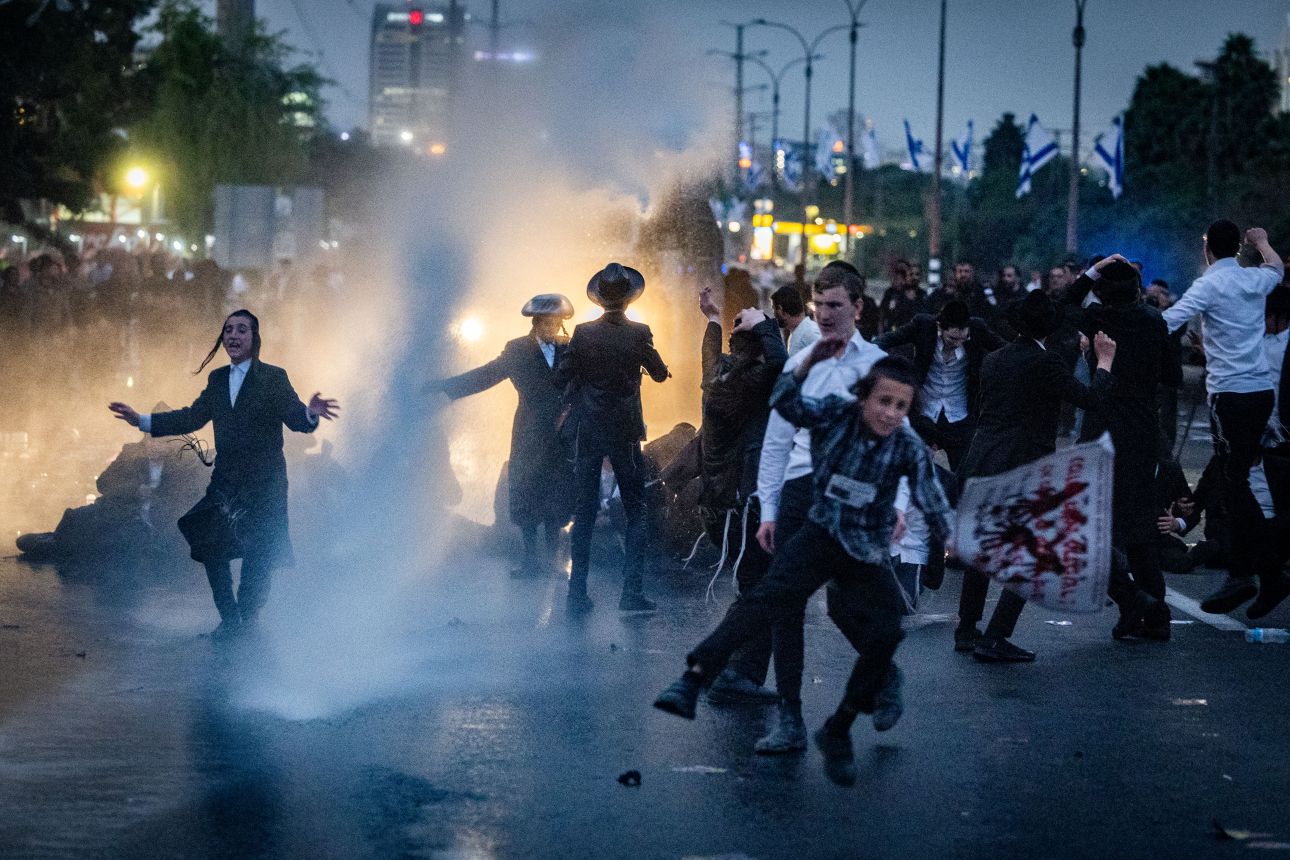
Photo by Chaim Goldberg/Flash90
On November 19, 2025, the Supreme Court of Israel ruled that the government must formulate an effective enforcement plan for drafting ultra-Orthodox men within 45 days. The government failed to do so, and as a result, a motion for contempt of court was filed against it for non-compliance with the Court’s orders. The State Attorney’s response to the motion confirms that the claim is well-founded: the government has indeed failed to formulate any effective enforcement plan, as the Court required.
The government’s treatment of the Court’s judgment is no longer merely another “dispute” between the judiciary and the executive of the kind we have seen many times in recent months. The government’s refusal to comply with a judgment ordering it to cease violating the law presents Israel with a direct challenge to the principle of the rule of law.
For decades, the issue of drafting yeshiva students was regulated through temporary arrangements and repeated deferments. However, with the expiration of the previous law exempting Haredim from IDF service and the resulting vacuum, the Court ruled—quite properly—that in the absence of an exemption law, the Security Service Law applies equally to all citizens of the state. The implication is that failure not drafting the ultra-Orthodox is no longer a matter of “policy,” but an active violation of existing law. The result is that the non-enlistment of ultra-Orthodox men likely constitutes the largest mass violation of the law in Israel since its establishment. When the government refrains from issuing draft orders at the required scale, or continues to fund institutions in defiance of legal directives, it is not acting within the realm of political discretion, but rather placing itself outside the normative hierarchy accepted in a liberal democracy.
At this juncture, with institutional dialogue between the branches at a dead end, the Supreme Court is required to decide not only the question of conscription, but also the question of its own authority. When the government is unwilling to comply with a judgment, the Court cannot simply abandon enforcement of the law. Such a situation would deal a severe blow to the rule of law. The panel of justices now faces several central alternatives, each with its own advantages and drawbacks.
The first option is to continue issuing orders to the government requiring it to draft ultra-Orthodox men and to formulate effective enforcement plans, while backing the Attorney General when she seeks to revoke the economic benefits granted to the ultra-Orthodox sector. The advantage of this approach is that it reduces the risk of direct confrontation between the Court and the government. The risk, however, is that the Court’s rulings will become a “dead letter.” If the government continues to ignore them and orders continue to accumulate without sanctions, public trust in the judicial system and in its ability to enforce the law may erode.
A second option is to initiate contempt of court proceedings, which allow for the imposition of personal fines or other sanctions on those who refuse to comply with a court order. To date, the Supreme Court has refrained from taking this step. Applying contempt proceedings to ministers or to senior officials in the police or the IDF could serve as a kind of “doomsday weapon,” intended to make clear that judicial rulings are not mere recommendations. The problem is that using this tool could trigger a direct confrontation between the branches, as ministers might announce their continued refusal to comply and challenge the Court to impose sanctions such as imprisonment.
Both options are deeply problematic, and the Court has no good alternatives for dealing with the situation. The solutions lie in the hands of the government. But so long as it insists on supporting violations of the law, the Court has no choice but to adopt measures that have some chance of preserving the rule of law.
“Where an unprecedented violation of the rule of law is at stake, unprecedented remedies are required,” the Court held in the case concerning the appointment of the Speaker of the Knesset, where it proposed an original remedy in the form of transferring authority to manage Knesset plenary sessions to the most senior member of Knesset. In light of the violation of the Court’s judgment in the present case, the Court may likewise be required to adopt an innovative remedy here as well.
Courts in the United States faced a similar situation in the 1950s and 1960s, when authorities in various states refused to cooperate with Supreme Court orders to dismantle racial segregation in public education. Several U.S. courts at the time took desegregation into their own hands, issuing direct orders regarding desegregation, supervising their implementation, mandating student transportation between schools, and more.
It is possible that the Court will be compelled to take similar steps in Israel—that is, to “step into the shoes of the executive branch” as a last resort. It could begin with more restrained directives to the relevant authorities, and if necessary, proceed to more stringent orders. For example, the Court might establish rigid timetables for the issuance of draft notices; appoint a court-appointed trustee or monitor to oversee the issuance of those notices; and require the IDF and the police to submit detailed progress reports at every stage, including oversight of arrest and adjudication procedures for draft evaders. The advantage of such a move is, of course, the preservation of the rule of law. The drawback is that it would bring about a direct clash between the Court and the executive branch—a clash that would be exploited to continue attacks on the Supreme Court. It may be that under the present circumstances, the Court has no alternative but to act in this way.
This article was published in the Jerusalem Post
The post”Should the Court Manage the Draft of the Ultra-Orthodox?” is auto generated by Nepalisrael.com’s Auto feed for the information purpose. [/gpt3]
