



NepalIsrael.com auto goggle feed
Some officials have described the initiative as naïve, particularly regarding the roles assigned by Trump to envoy Steve Witkoff and Jared Kushner. But participants in the inaugural gathering said the plan reflects months of coordination among American, Israeli, Arab and European figures and could represent what they call a historic opportunity to reshape Gaza if security conditions are met.
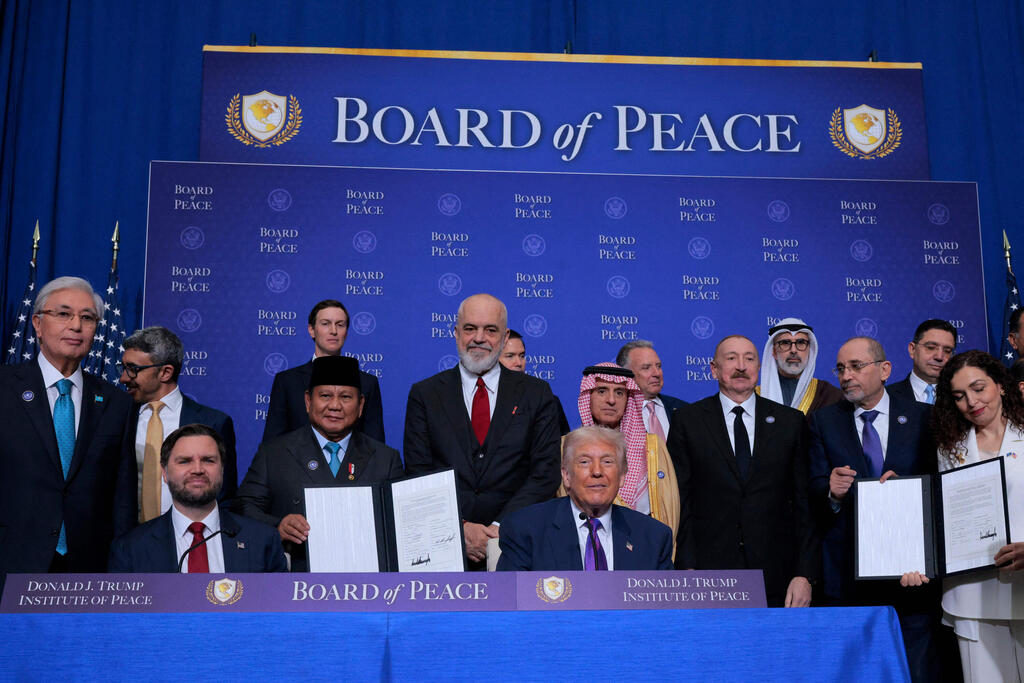
The Board of Peace includes U.S. officials such as Witkoff, Kushner and Secretary of State Marco Rubio, as well as retired American generals and international figures including former British Prime Minister Tony Blair. Representatives from most Arab states are involved, alongside Palestinian representatives selected with the backing of regional governments, including Israel. Organizers said those Palestinian factions have no direct or indirect ties to Hamas.
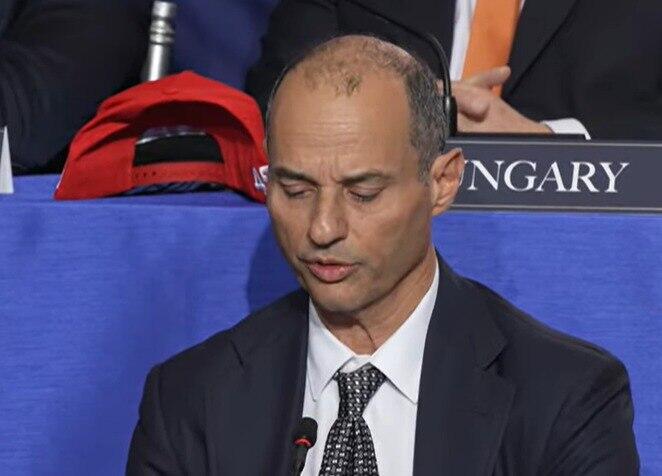
The Israeli contingent includes businessman Yakir Gabay, technology entrepreneur Liran Tancman and investor Michael Eisenberg, who serves as Prime Minister Benjamin Netanyahu’s representative at a U.S. coordination headquarters in Kiryat Gat and is described by participants as a full partner in the board’s work.
Gabay, described by colleagues as hawkish on security matters, said reconstruction funds would not be released unless Hamas fully disarms.
“Not a single dollar can be transferred and no valve can be opened unless Hamas lays down its weapons. That is nonnegotiable,” he said in closed forums, according to participants.
A key element pressed by Israeli representatives is reform of school textbooks in Gaza to promote tolerance and halt incitement against Israel, a condition they describe as no less important than dismantling Hamas’ weapons.
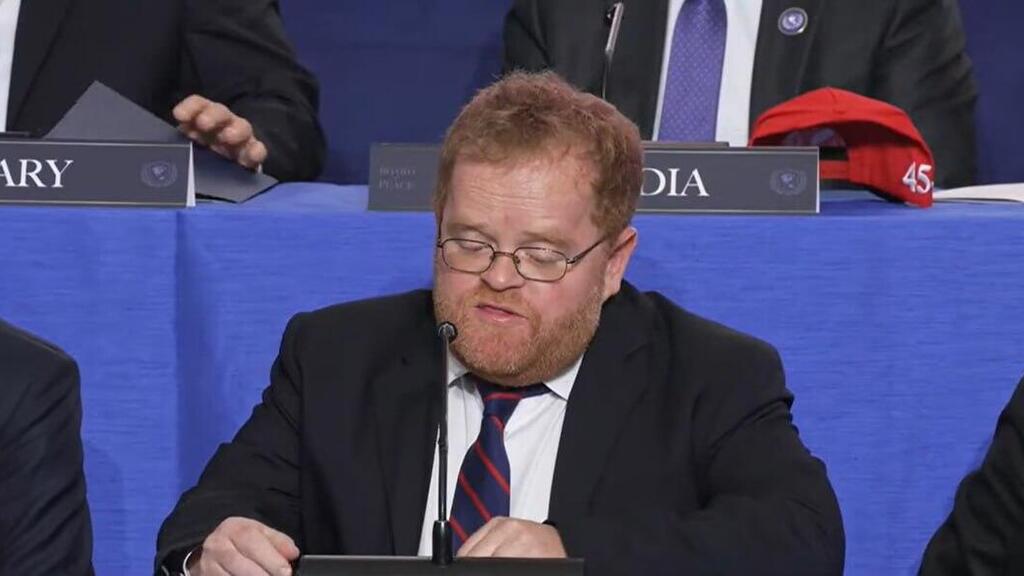
In remarks at the board’s opening session, Gabay outlined what he called a comprehensive rebuilding plan.
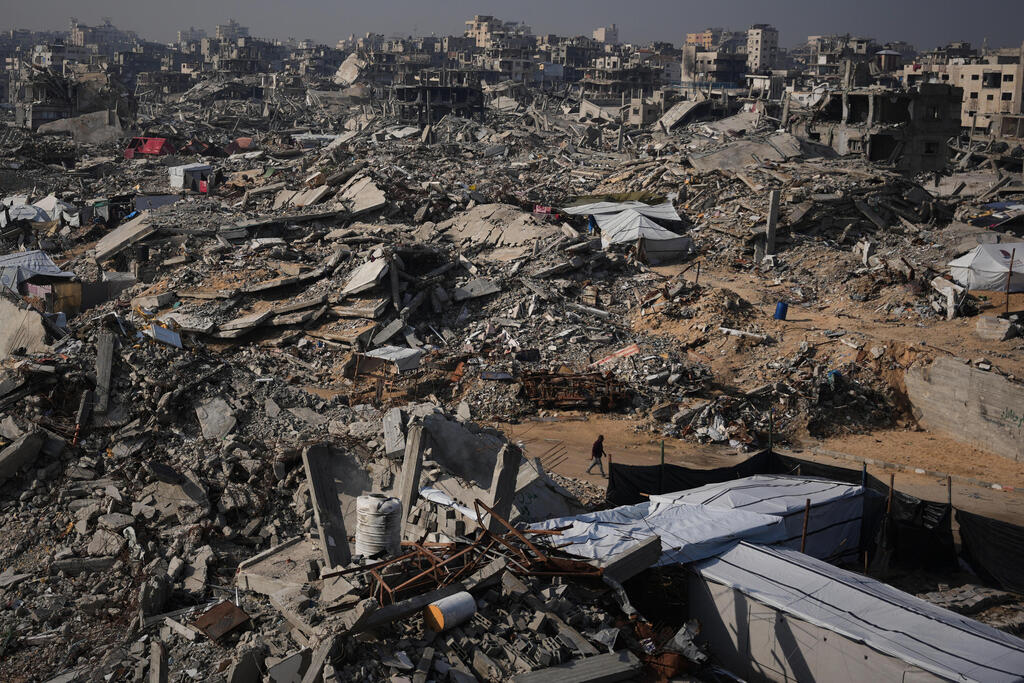
“Gaza is destroyed. We have gathered here on a historic day with a shared vision to build Gaza for future generations,” he said. The plan calls for clearing and recycling an estimated 70 million tons of rubble and unexploded ordnance, dismantling hundreds of kilometers of tunnels, providing rapid temporary housing and beginning permanent infrastructure projects.
According to Gabay, proposals include modern hospitals, schools, factories, agricultural zones, roads, rail lines, energy facilities, water infrastructure, data centers, a seaport and an airport. He said contractors who have built millions of homes across the Middle East would be recruited at competitive prices and that funding commitments are already in place.
He added that Gaza’s coastline could be developed into a “Middle Eastern Riviera” with up to 200 hotels and potential artificial islands, with profits directed to Gaza residents. All development, he said, would remain conditional on demilitarization and the disarmament of Hamas.
Kushner told participants the initiative is structured like a private-sector board meeting, with members reporting on opportunities and challenges.
“We cannot change the past, but we can change the future if we focus the right way,” he said. “Failure is not an option.”
U.S. investor Marc Rowan presented financial projections, saying the reconstruction effort would begin in Rafah with a goal of rebuilding the city within three years. Plans include constructing 100,000 homes for 500,000 residents in the first phase, with $5 billion invested in infrastructure. Over time, he said, 400,000 homes would be built across Gaza, alongside $30 billion in infrastructure investment.
Rowan estimated the total potential value of real estate and infrastructure at $115 billion, arguing that the main obstacle is not funding but security and political stability.
Organizers said $6.5 billion has already been pledged, including $1.2 billion from the United Arab Emirates, $1 billion from Qatar, $1.25 billion from the United States and additional funding from Kuwait and the World Bank. Trump announced that the United States would contribute an additional $10 billion. European Union representatives attended as observers but have not yet committed funds.
Central to the plan is a proposal for Hamas to surrender its weapons in stages — first heavy weaponry, then tunnel infrastructure and finally small arms. Under the proposal, individual Hamas members who turn in weapons would receive financial compensation and amnesty. Board officials said they expect a decision from Hamas in March, with disarmament potentially beginning in April.
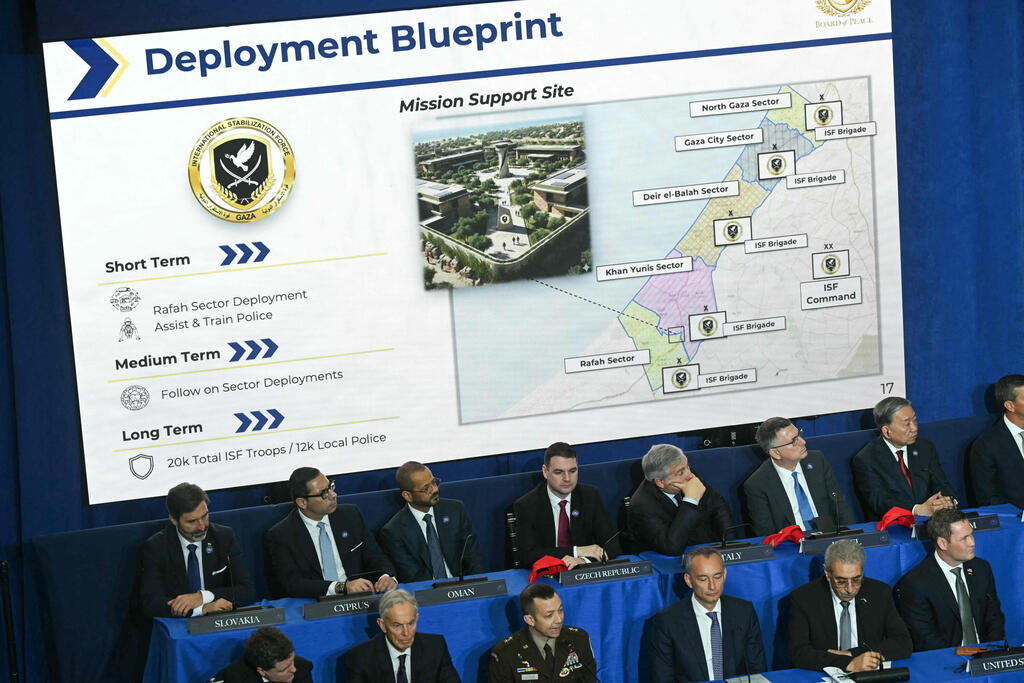
In parallel, organizers are establishing a new Palestinian police force that would begin with 2,000 officers and eventually expand to 12,000. Officials said recruits are being trained in Jordan and Egypt and will not include individuals with a background in terrorism. The goal, they said, is “one weapon and one authority.”
A senior board official said the timeline envisions rebuilding Rafah within three years and completing Gaza’s broader reconstruction within a decade. Plans include a rail network, potentially a monorail or tram system, and linking Gaza as a logistics hub to the Gulf, Jordan, Egypt, Saudi Arabia and Israel, with trade routes extending to Europe.
The official emphasized that progress depends entirely on Hamas’ response.
“It is very binary,” he said. “On the positive track, everything moves forward. On the negative track, nothing happens.”
The post”Israeli members of Trump’s Board of Peace vow Hamas will disarm ‘one way or another'” is auto generated by Nepalisrael.com’s Auto feed for the information purpose. [/gpt3]
