



NepalIsrael.com auto goggle feed
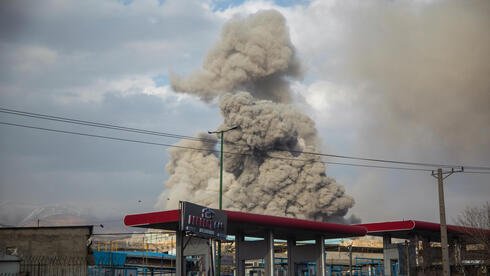
The scale of the Israeli Air Force’s operations against Iran on the third day of the current conflict is evident in the unprecedented consumption of munitions since hostilities began on Saturday morning. According to military sources, Air Force aircraft have deployed approximately 3,000 munitions of various types across Iran. This represents a five-fold increase in the rate of missile and bomb use compared to the 12-Day War last June, during which the Air Force expended about 3,700 munitions over nearly two weeks. The military cost of that previous conflict was estimated at 20 billion shekels (approximately $6.5 billion), and Israeli and U.S. estimates suggest the current campaign could last around four weeks.
Just eight months after President Trump and Prime Minister Benjamin Netanyahu declared victory in the 12-Day War, the IDF justifies the current campaign by citing the rapid restoration of Iranian military infrastructure attacked last June. Targets include ballistic missile production facilities, air defense systems, and nuclear program sites.
Senior Israeli officers describe the operation as a broader and more comprehensive campaign than the 12-Day War, aimed at disrupting Iran’s progress toward nuclear weapons. They note that the previous operation ended with achievements deemed “incomplete,” and within eight months, Iran had largely restored its capabilities. This outcome, officers say, was anticipated and communicated to the Prime Minister last June.
Unlike Operation Rising Lion, where the U.S. role was largely limited to strikes on nuclear sites using B2 bombers, the current campaign involves the U.S. military as a central partner, with the possibility of additional countries, including Saudi Arabia, participating. The defense establishment expects that concentrating unprecedented military power on a long list of targets could significantly delay Iran’s restoration of capabilities. Yet, just two and a half days into the campaign, officials warn that the conflict will likely not be the last, with costs to the Israeli economy projected in tens of billions of shekels.
The prevailing assumption is that the war may end without a formal ceasefire, requiring intermittent force actions. Hundreds of kilograms of Iran’s enriched uranium remain unlocated, and it is unclear if these materials will be addressed in the current campaign. Nevertheless, officers express cautious optimism that the U.S. military’s involvement alongside the IDF provides strategic support.
Despite ongoing operations, Iran is expected to retain ballistic missile launch capabilities, including mobile launchers hidden in tunnels and underground facilities. However, the IDF has achieved significant disruption in Iran’s military-industrial value chain, halving ammunition availability according to internal estimates.
To support these operations, the Defense Ministry has initiated a large-scale air and sea supply effort. The first U.S. cargo planes delivering ammunition to Israel have already landed, ensuring the Air Force maintains operational continuity. Prior to the outbreak of hostilities, a cargo ship arrived at the Haifa port, carrying tanks, trucks, and other military equipment.
Since the start of the October 7 war, roughly 1,150 cargo flights and 166 ships carrying over 130,000 tons of ammunition and military equipment have reached Israel. Of this, more than 6,500 tons were delivered in around 90 flights and landings in recent weeks, highlighting the extraordinary logistical efforts underway.
The post”IDF drops 3,000 munitions in three days against Iran, five times last June’s rate” is auto generated by Nepalisrael.com’s Auto feed for the information purpose. [/gpt3]
