



NepalIsrael.com auto goggle feed
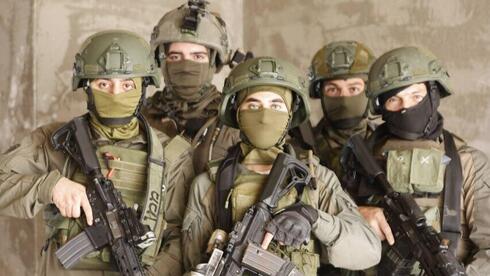
At an abandoned construction site in Sderot, among exposed concrete walls and staircases still lacking handrails, 24 fully equipped gunmen move in tense silence. Room by room, floor by floor, they identify threats, clear angles and storm forward. But this isn’t an elite commando unit—it’s the city’s alert squad, training as if the next threat is already here.
More than two years after the October 7 massacre, the message in Sderot is clear: no one is waiting for reinforcements. The city’s alert squad, now over 100-strong and recently renamed the “Defense Division,” has begun specialized counterterrorism training, focusing on combat in urban terrain—the exact battlefield of that dark Saturday.
Hamas terrorists infiltrating the southern city of Sderot on October 7, 2023
(Video: Daniel Plamadiala )


The training is led by reservists from Unit 707—Israel’s elite counterterrorism unit. The program is headed by Lt. Col. (res.) Marc Schulman, 43, former deputy commander of the unit and now head of its reservist force. Today, he serves as CEO of Lotar Farm, a company contracted to train the unit.
“What happened on October 7 exposed a painful truth,” Schulman says. “The initial response came from brave individuals, but in many cases, without sufficient skills. Sometimes the level of preparedness was almost zero, and that’s exactly what drove us to take this on and build it up.”
According to Schulman, that day proved that alert squads aren’t an add-on to security, they are the first line of defense. “No matter the scenario—a terrorist cell breach, a lone attacker, a shooting rampage, a truck ramming through gates—you want them to respond quickly, accurately, and correctly. First, personal skill. Then teamwork. And when necessary, managing multiple scenes at once. In some Gaza border communities, alert squads saved their areas because they were organized, trained, and when it mattered—they delivered.”
But in Sderot, the new reality extends beyond the alert squad itself. According to city data, there are now roughly 5,500 armed civilians in Sderot, compared to just a few hundred before Hamas launched its surprise attack. In a city of about 40,000 residents, that means one in every seven is armed.
7 View gallery

Members of Sderot’s municipal Defense Division undergo counterterrorism training
(Photo: Gadi Kabalo)
Rather than ignore the statistic, the municipality decided to formalize it. Mayor Alon Davidi announced the creation of a “Community of the Armed.” Every resident who carries a weapon will receive a subsidized ammunition package, an identification cap, training in rules of engagement and inclusion in a municipal registry.
“We’ve created a trained, organized civilian armed community—already numbering 400 to 500 people,” Davidi says. “This isn’t chaos. If the system collapses, they’ll know how to act and coordinate with regular security forces.”
Lt. Col. (res.) Erez Guez, head of the city’s newly established security division—formed after 53 civilians and security personnel were murdered in the massacre—says the new approach centers around the citizen. “The goal is that if something happens near a civilian, I’m counting on them to respond first. Security begins with the citizen,” he explains.
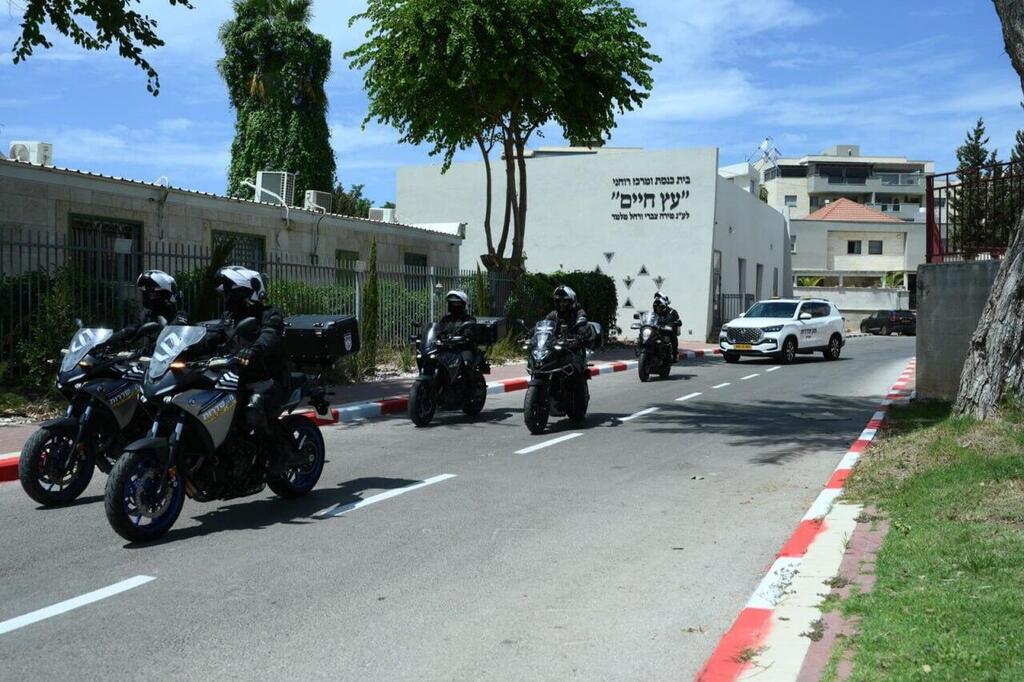
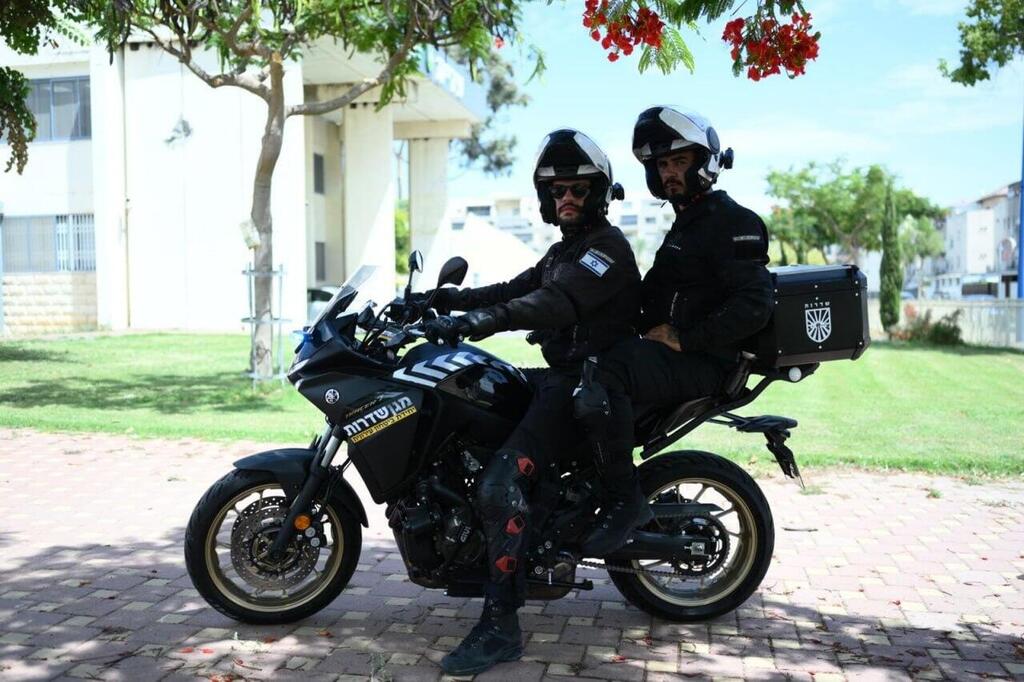
The aim is for all of the city’s security elements to function as a coordinated network. “We established the Sderot Shield unit, which operates 24/7 on motorcycles and patrol cars, designed to bridge the response gap until the Defense Division is activated. It’s a matter of minutes. At any given time, dozens from the Defense Division are on standby—and we can call up the rest if needed. We have the armed civilian community, the Sderot Shield unit, the city police force has doubled in size, and we have backup from the army division if necessary. Even I, a municipal employee, carry an M-16 and am ready for any situation.”

Tell us about the alert squad and how it has changed.
“First of all, it’s no longer a squad—it’s now a Defense Division with over 100 fighters. It’s a volunteer force organized by the IDF under the command of military security coordinators. It’s made up of reservists who served in combat roles. Everyone goes through a screening and selection process and is required to meet a fitness standard based on the lessons of October 7. They must be in adequate physical condition. The army provides all the basic gear—but we want them to have the highest-quality equipment, so we upgrade it: enhanced vests and weapons, top-tier tactical gear on the market, tactical uniforms, electro-optical sights, drones, armored vehicles and advanced surveillance tools.”
Beyond the gear, Guez also speaks about the training they provide, including Lotar Farm’s course. “We’re creating tailored training packages. We partnered with Lotar Farm because they offer critical instruction in urban warfare. Fighting in built-up areas is highly complex—you have to study it. They learn how to move inside buildings, climb floors and navigate through multiple entry points.”
Back at the training, A., the commander of the alert squad, takes a short break between drills. “I’ve been in the unit for about a year and a half, and I’ve commanded it for eight months. On October 7, I was at home with my family. We realized something was happening, but we didn’t understand how big it was.”
A., 25, was born in Sderot. He’s married, a father of two, soon to be three. He says he joined the municipal Defense Division in the aftermath of the massacre, driven by a desire to protect his home.
“I was discharged from the army shortly before the war. I was immediately called up for reserve duty, and as soon as I could, I joined the alert squad—at the very first opportunity—because I understood that our city needs the best possible defense,” he says.
Since then, he adds, everything has changed. “As part of the lessons learned, we’ve grown in manpower, resources and weapons. The training now is at the highest possible level. We’re here to provide the initial response, and that means we have to know how to fight in very complex urban environments. It’s important to me that people know there’s a strong, skilled force here, ready to fight on its own for as long as needed, and also to operate in full coordination with the army.”
Weitzman, deputy team commander in the municipal Defense Division, is 50 years old, married, a father of five and grandfather of two. He describes that day from another angle. “We were at home, hosting family. When the fighting started, we were in denial. We didn’t understand how many terrorists were here. I told my son, ‘Let’s go pray.’ When we stepped outside, the neighbors shouted, ‘Terrorists, terrorists—get back inside!’”
He sent his son home and ran to his brother’s house, pistol in hand. “I heard bursts of gunfire. People were yelling from their windows, ‘Go back home.’ When I reached him, I saw him taking cover behind a bullet-riddled army vehicle. The fighting was just beyond our fence. We saw the terrorists. It was a deeply frustrating feeling; there was a battle right in front of me, and I had no way to defend my home. Total helplessness.”
7 View gallery
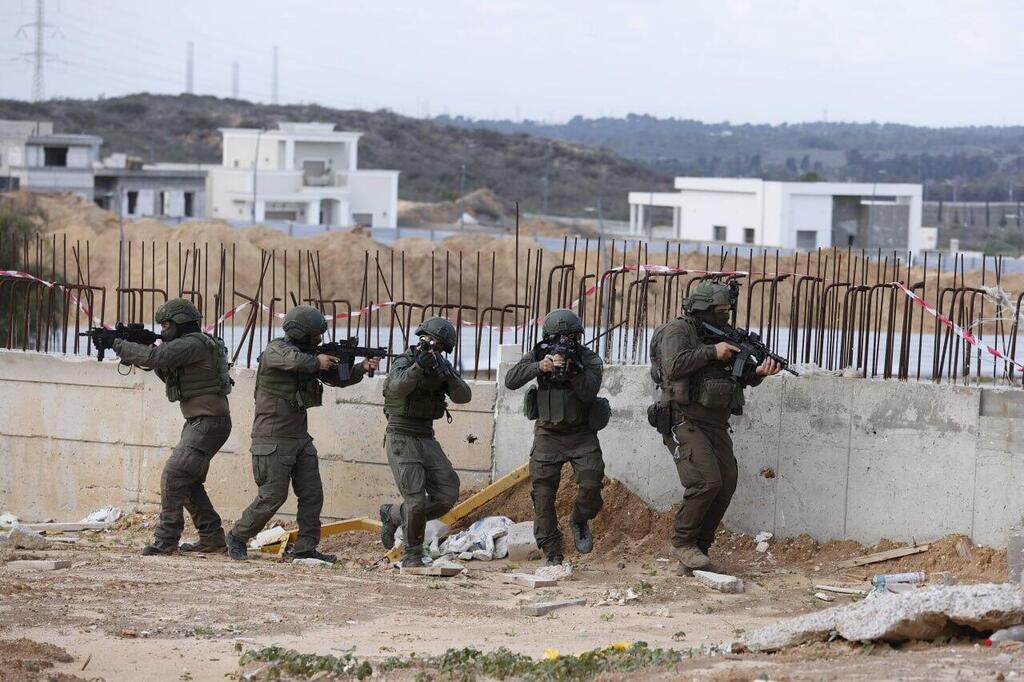
Members of Sderot’s municipal Defense Division undergo counterterrorism training
(Photo: Gadi Kabalo)


During the evacuation to Eilat, he says, a few things became clear to him. “I told myself this city must be defended at all costs, that I’d never again be in a position where I couldn’t respond, and that we would never leave. I’m at the age where I’m exempt from reserve duty, but I re-enlisted. We’re here to make sure this never happens again.”
As for the counterterrorism training he and his team are undergoing, he puts it simply: “If there’s another war, it will be in tight streets and inside buildings. That’s what we’re preparing for. The first houses of Sderot are just a kilometer from Gaza’s Beit Hanoun. We don’t know what tomorrow will bring. After what we went through, we have to be ready. The kids still haven’t recovered.”
Lt. Col. Schulman himself retired from the IDF at the end of 2024, after a year of active combat as a regular officer in Unit 707. Throughout his service, he led and supported the unit in both active and reserve duty, including the difficult days of fighting around Gaza. “We have people who fought here and fell here,” he says. “The former commander of the unit, Eli Ginsberg, of blessed memory, was killed in Kibbutz Be’eri, along with four other fighters. That creates a deep connection. Sderot isn’t just another dot on the map.”
He sees the training of Sderot’s alert squad as only the beginning. “In a few years, most alert squads and Defense Divisions across Israel will go through this kind of training. Operating an alert squad is a discipline in its own right. When they’re trained to function in pairs, in squads or as full units, their performance in real time looks completely different.”
“The alert squad has essentially become a rapid-response company,” Mayor Davidi explains. “As a city, we’ve learned that we need to prepare for any scenario we can possibly imagine. The truth is, on October 7, we saw that the IDF didn’t understand what defending a city from an invasion really means.”
Davidi insists that these actions don’t reflect a lack of trust in the state or the army, but rather serve as a “complementary response.” “I trust everyone and work with everyone,” he says, “but I’m not waiting for anyone. I want to challenge the system.”
Does that mean, in your view, Hamas hasn’t been defeated?
“We’re training in case something collapses. Still, the most important thing the prime minister and the government must do is fulfill the promise and uphold the Cabinet decision declaring security control over Gaza and the dismantling of Hamas. If we don’t destroy Hamas, we will see another attack of some form and scale. We must continue to hold the yellow line, and anyone who abandons it is simply insane and hasn’t understood anything.
“Decisions about destroying Hamas, waging war or holding the yellow line, that’s not in my hands or the city’s. But in the meantime, I’m doing everything that is in my authority.”
On the ground, the message is clear: Sderot is no longer relying on luck. The fighters continue to drill through extreme scenarios at the construction site. The “Community of the Armed” keeps growing, receiving ammunition from the municipality. New municipal security units are taking shape. “Complementary response” or “first response”? The terminology, it seems, no longer matters.
The post”how one Israeli city is preparing for the next invasion” is auto generated by Nepalisrael.com’s Auto feed for the information purpose. [/gpt3]
