



NepalIsrael.com auto goggle feed
Iran fired eight salvos of ballistic missiles at Israel from midnight to early Friday evening, at least two of which appeared to carry cluster bomb warheads, damaging houses and lightly wounding some residents, as Israel named several Iranian officials it killed in recent days.
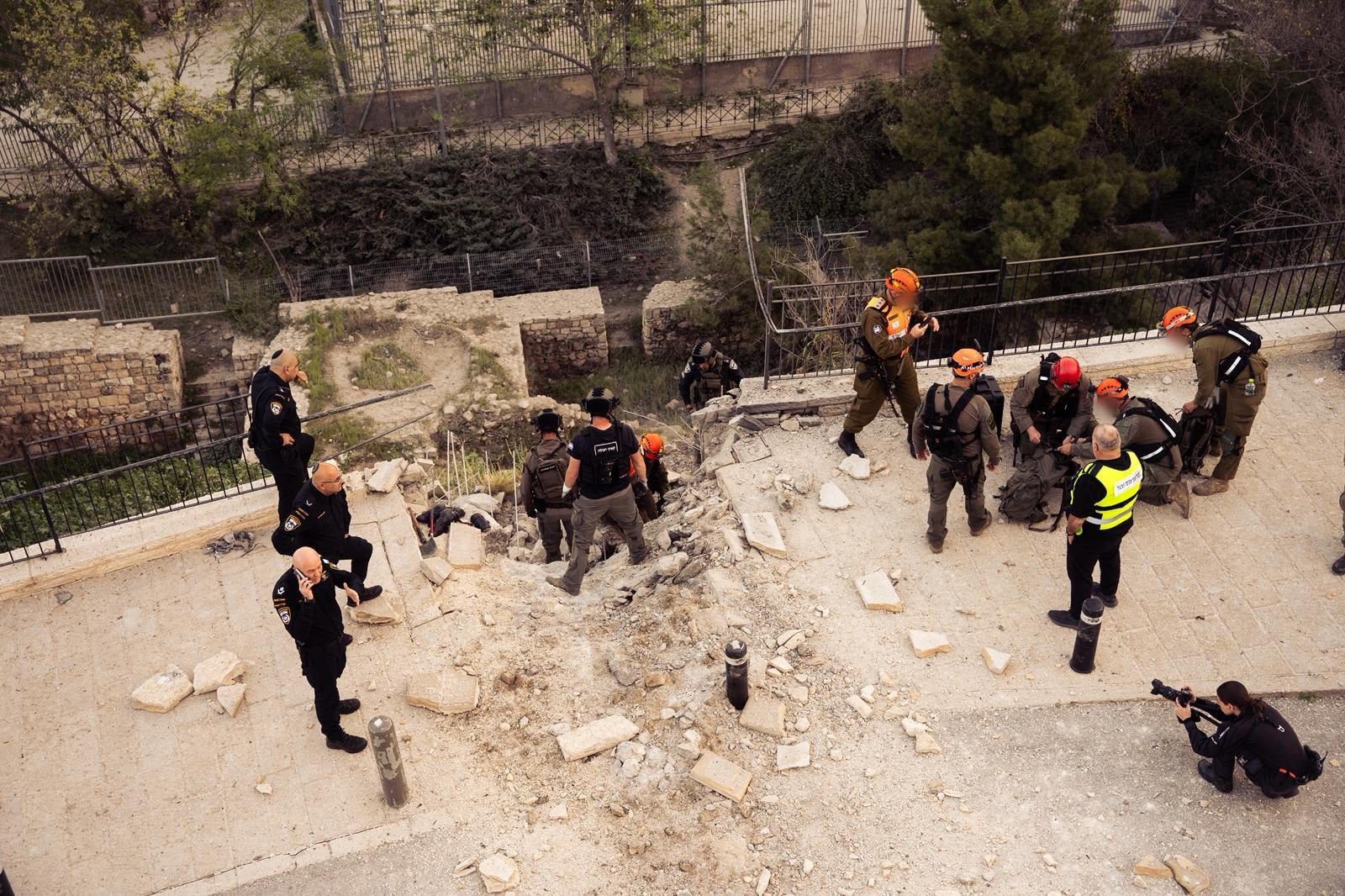
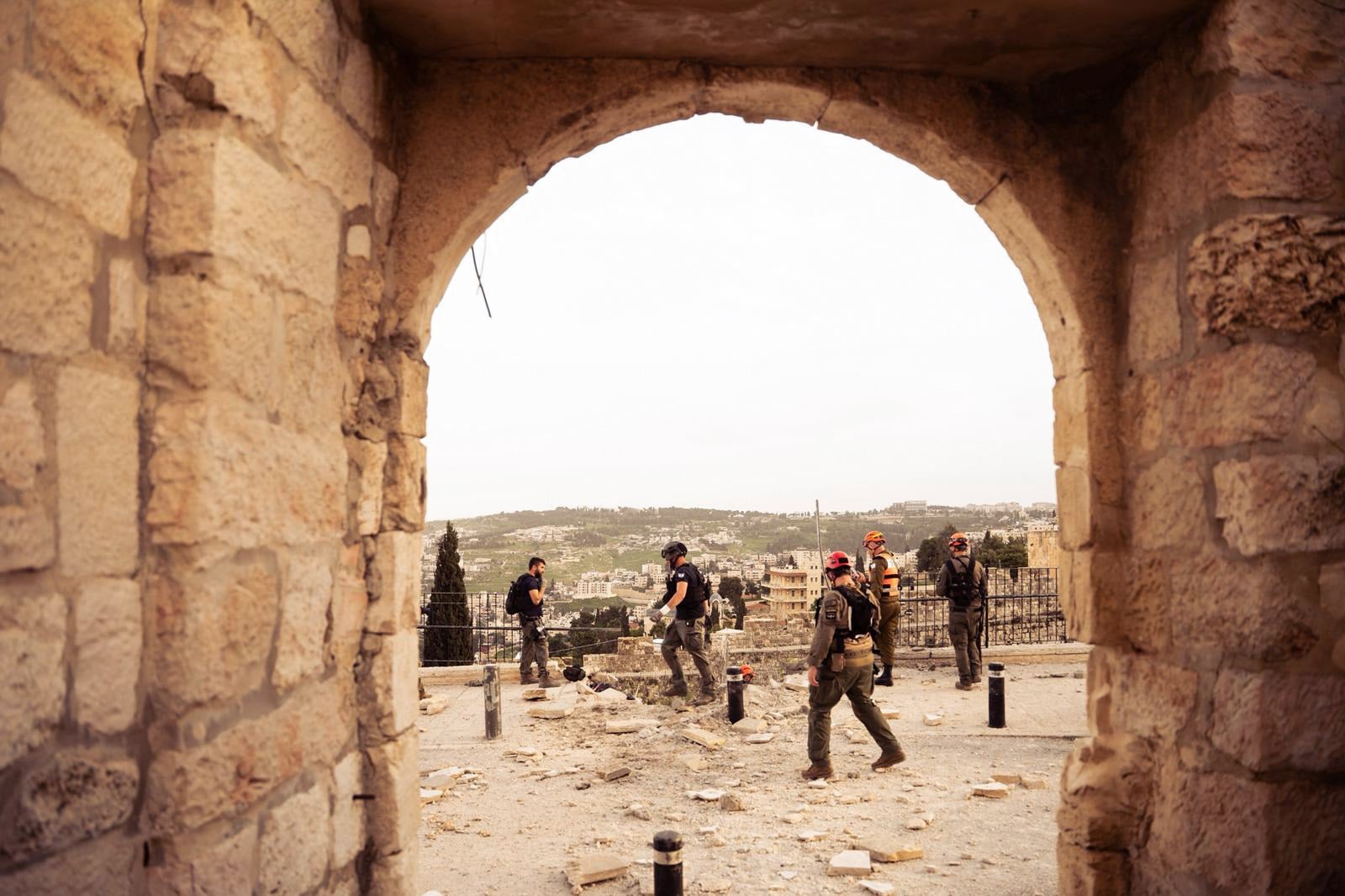
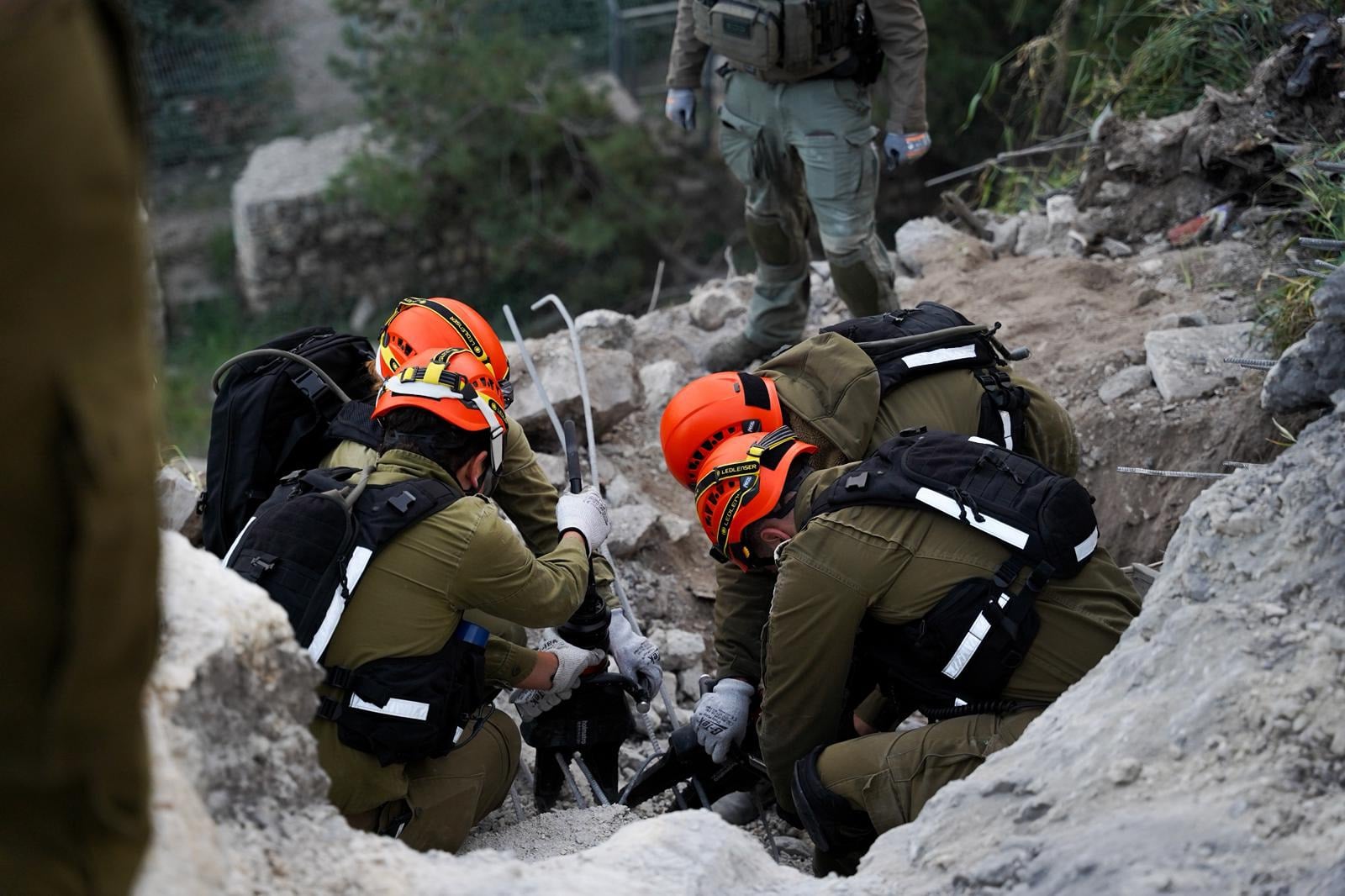
Fragments from one intercepted missile impacted in Jerusalem’s Old City, causing damage to a parking lot in the Jewish Quarter — around 400 meters from the Western Wall and Al-Aqsa Mosque compound on the Temple Mount.
No injuries were reported.
Israel Police officers soon after inspected a public playground, just below the site where debris from the intercepted Iranian missile careened onto the walled city’s southern flank, for further fragments.
The impact was just above Dung Gate, one of seven functional entrances into the Old City, and came shortly before the start of Shabbat, disrupting residents’ preparations with a loud bang.
After the hit, soldiers moved away crowds of Orthodox children craning their necks to see the damage. Up a limestone passageway, an Armenian man quietly swept up shards of glass blown out from his window.
In the central city of Rehovot, the cluster attacks set one home ablaze, as fragments from intercepted missiles impacted in some 8-10 locations, according to police.
A man and a woman in their 70s were lightly wounded by a blast, while part of a missile landed inside another resident’s living room.
Zohar Damati, who lives nearby, told the Ynet news site: “There was a crazy boom, we realized it was exactly where our next-door neighbor lives. They said he was taken to a hospital, now we’re praying for him to get better.”
Yonatan Ben David, another neighbor, said: “We felt a really huge boom, but we knew it hadn’t exploded because there wasn’t any blast hitting the windows,” calling what happened a “crazy miracle.”
Rescue forces are responding to reports of an impact in Jerusalem’s Old City, following Iran’s latest ballistic missile attack.
Damage was caused, footage shows, but no injuries are reported, medics say. pic.twitter.com/yL7h05K044
— Emanuel (Mannie) Fabian (@manniefabian) March 20, 2026
The Health Ministry reported earlier Friday that the total number of hospitalizations as a direct or indirect result of the war in Iran was 4,099.
Among those treated in hospitals over the previous day, two were in serious condition, two were in moderate condition and 136 were in good condition. Ten people were treated for anxiety.
The ministry did not give a breakdown of the causes of injuries, and some were presumably sustained by people trying to reach shelters rather than as a direct result of an Iranian missile attack or rocket fire from Lebanon.
בעקבות השיגור מאיראן: בית נפגע ברחובות, שריפה פרצה במקום | תיעוד @Itsik_zuarets pic.twitter.com/PCo2FrQaE3
— כאן חדשות (@kann_news) March 20, 2026
IDF: Killed Basij intelligence chief in Monday strike
The Israel Defense Forces announced Friday that one of its airstrikes in Tehran earlier this week, which killed the commander of Iran’s volunteer Basij militia and his deputy, also killed the paramilitary force’s intelligence officer.
On Tuesday, the military had said Basij commander Gholamreza Soleimani, his deputy and several other top officers were killed in the strike.
The same strike also killed Ismail Ahmadi, the chief of intelligence in the Basij, the IDF confirmed.
????ELIMINATED: Esmail Ahmadi, Head of the Intelligence Division of the Basij Force, as well as several other senior commanders in a strike on the senior leadership of the Basij Force in the heart of Tehran.
Ahmadi played a central role in advancing and executing terror attacks… pic.twitter.com/M9mwVmlvH7
— Israel Defense Forces (@IDF) March 20, 2026
The top officials in the oppressive force, a branch of the Islamic Revolutionary Guards Corps, had been targeted while at a tent camp that was recently established by the Basij.
According to the IDF, the Basij set up the camp after the military struck many of the headquarters of the paramilitary force.
Later Friday, IDF Spokesman Brig. Gen. Effie Defrin announced a top official in Iran’s Intelligence Ministry was killed in an airstrike in Tehran earlier this week. Defrin said the strike on Wednesday that killed Mehdi Rastami Shamastan came following “joint intelligence research by the Military Intelligence Directorate, the Mossad and the Shin Bet.”
Shamastan was “a key figure in advancing terror activity against Israeli and Jewish civilians in Israel and around the world,” he said.
IRGC spokesman boasts to press, is killed by time he’s quoted
During a press conference Thursday, Prime Minister Benjamin Netanyahu said the US-Israeli campaign against the Islamic Republic was destroying Iran’s existing store of ballistic missiles and had destroyed its ability to manufacture them.
On Friday, IRGC spokesman Gen. Ali Mohammad Naini was quoted by the state-run IRAN newspaper as rejecting that assertion.
“Our missile industry score is 20,” he said, referring to a perfect score in the Iranian schools’ grading system. “And there is no concern in this regard because we are producing missiles even during war conditions, which is amazing, and there is no particular problem in stockpiling.”
Hours after the comments were published, the IRGC announced that Israel killed Naini in an airstrike the previous night.

The IDF confirmed it had killed Naini, saying in a statement that the strike was carried out by the Israeli Air Force, following intelligence provided by the Military Intelligence Directorate.
The military said the slain general “served in several propaganda and public relations roles” over the years, including as “the IRGC’s main propagandist” for the past two.
“In his role, Naini disseminated the regime’s terrorist propaganda to its proxies across the Middle East to influence and advance terror attacks against the State of Israel from the different fronts,” the IDF said.
US, Israel said to strike Iranian cargo ships
Also Friday, the United States and Israel struck 16 Iranian cargo vessels in port towns on the Gulf, local media reported, saying the ships were burnt.
“Following the American–Zionist air attack, at least 16 cargo vessels belonging to citizens of the towns of Bandar Lengeh and Bandar Kong were completely burnt in the fire,” a local official from the southern Hormozgan province said, quoted by the Tasnim news agency.
The IDF also announced twice that it was carrying out waves of airstrikes in Iran – first overnight in Tehran, then midday in the city of Nur, northeast of the capital.
It said the overnight strikes targeted “infrastructure of the Iranian terror regime across Tehran.”
According to military officials, more than a dozen Israeli Air Force drones have been shot down over Iran amid the current war.
An exact number was not given, but the officials said that fewer than 20 unmanned aerial vehicles have been lost.
The military said its policy during the war is that loss of unmanned aircraft is acceptable for the purpose of thwarting ballistic missile attacks on Israel’s home front.
For that reason, the IAF has been sending cheaper UAVs for riskier strike missions in Iran, knowing that they are likely to be shot down. In at least one case, one of these cheaper drones actually made it back to Israel, according to military officials.
No Israeli fighter jets have been shot down, though pilots have come under anti-aircraft missile fire numerous times. In one case, the military said a fighter pilot was “close to being hit.”
The post”Fragment from downed Iranian missile impacts in Jerusalem’s Old City; Rehovot homes damaged” is auto generated by Nepalisrael.com’s Auto feed for the information purpose. [/gpt3]
