



NepalIsrael.com auto goggle feed
 The US-enabled Israeli genocide in Gaza has persisted for 27 months and sent shockwaves across the world. In its wake, two puzzles remain unsolved: Beyond the sheer shock of the Hamas attack on October 7, 2023, what motivates so much of the Israeli public to support their government’s genocidal annihilation of Palestinians and the destruction of Palestinian society? And why have the United States and key Western governments so enthusiastically supported Israel’s genocide and silenced public advocacy for Palestinian rights?
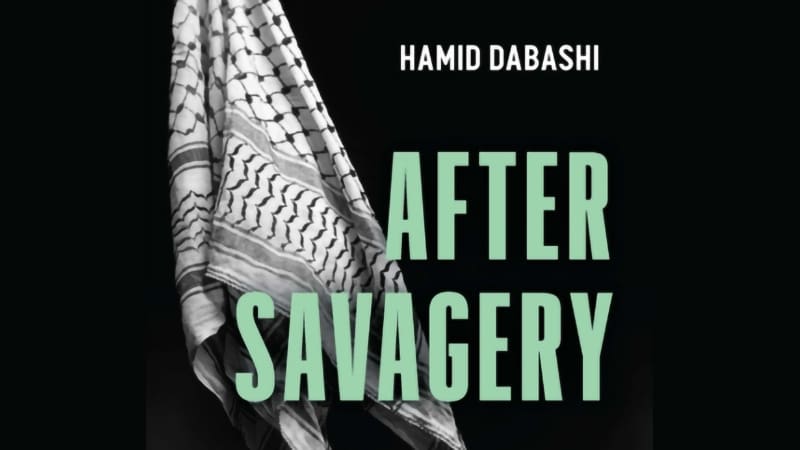
In this powerful book, Hamid Dabashi answers these questions by analyzing Gaza in the wider context of Western colonialism since the 16th century—or “Western” colonialism, as he would put it. The book’s central premise, captured in its subtitle, “Gaza, Genocide, and the Illusion of Western Civilization,” is that Israel’s militarism and the Palestinian genocide are not isolated dimensions of local tensions in the Levant but the apex of Western racism and colonial brutality. The concepts of “the West” and “Western civilization” as a civilizing force or source of moral authority are no longer tenable. “The Israeli savagery staged during the most recent war on Gaza, but always evident ever since its colonial invention, is not the cause but the symptom of the delusional malaise called ‘the West,’” Dabashi writes (p. 31).
Hamid Dabashi, Hagop Kevorkian Professor of Iranian Studies and Comparative Literature at Columbia University in New York, is a prolific scholar on Iranian culture and history, and on global political, economic, cultural, and military interactions more generally. In a way that few other authors can match, he here brings together his knowledge of both Western and non-Western traditions in philosophy, culture, the arts, identity, and state policies.
Dabashi makes four core points that are profound in their scope and moral depth. They are convincing, although in places more evidence would make them more fully compelling. He also leaves unanswered some important questions about the behavior of western citizens and governments during the genocide that deserve further attention.
His first theme is that Israel’s genocide—and that it only happened with the sustained support of most of the West—has exposed it as a classic settler-colonial garrison state that serves western globalized capitalism and plunder. “The link between garrison states, colonialism, and pure violence,” he notes, “is written into the very fabric of Israel, as first a European and now an American settler-colonial project” (p.114).
Dabashi’s second theme is that western settler-colonialism has always practiced racism against other ethnicities and religions, especially Judaism and Islam. He sees Israel’s Gaza genocide and the Nazi Holocaust as related brutalities in different parts of a Western civilization that looks more savage—and thus more fraudulent—every day.Dabashi extensively quotes leading European philosophers and authors to show how European racism explicitly saw Western societies as the center and drivers of world history, while viewing everyone else as inhabiting the realms of savagery. Among the dozens of notable authors whom he quotes are Joseph Conrad, Aime Cesaire, Immanuel Kant, Mahmoud Darwish, Ghassan Kanafani, Ilan Pappe, Patrick Wolfe, Theodor Adorno, Jurgen Habermas, Edward Said, and Georg Hegel. I especially appreciated his quote from the eminent French philosopher Emmanuel Levinas that “humanity consists of the Bible and the Greek. All the rest can be translated: all the rest – all the exotic – is dance” (p .97). Dabashi also quotes Italian philosopher Giorgio Agamben’s “compelling proposition” that modern states are “rooted in the concentration camps they run and that their sovereignty is rooted in the systematic destruction of human life these camps best represent” (p. 116). Dabashi also cites Agamben’s statement that “Today it is not the city but rather the camp that is the fundamental biopolitical paradigm of the West” (p. 123).
The book’s third key idea is the centrality of Palestine to a “radically different liberation metaphysics, irreducible to any sectarian denomination” (p. 134) without racism, occupation, mass killings, exile, or cultural annihilation. As the United States and Israel move along their sustained course of colonialism, Dabashi argues that “Palestine today is the epicenter of a radically different conception of the world—a fragile and endangered world that has overcome all its fictional frontiers and mythologies of power and politics” (p. 135). Palestine has transcended local or Third World concerns, Dabashi says, and represents a global cry for freedom, a repository of all global anti-colonial struggles, and a center of resistance to Israeli-Western brutality.
Finally, Dabashi asks “Where do we go from here?” (p. 155) after Gaza has exposed the West as “the code of a global criminality—not just because it has subjected the world to unspeakable savagery as Israel now does in Palestine, but because the West calls itself a ‘civilization.’ It is not a civilization. It is barbarism manifest” (pp.169-170). After the West, he sees a new moral intuition and underpinning emerging that must embrace us all. For all people in the Middle East and elsewhere to live together as equals requires deep structural and moral changes, including ridding the world of the rot at the core of notions such as “the West” and “Zionism.” This imperative requires recognizing the common elements of the Gaza genocide and the Nazi Holocaust of the Jews and other victims.
“Witnessing this savagery in Gaza, we can clearly link the Jewish Holocaust to the Palestinian genocide and see genocidal Zionism as the logical colonial extension of European fascism,” Dabashi writes (p. xvii). A better world ahead will require the West and Israel to end their traditions of hating, mistreating, dehumanizing, demonizing, incarcerating, expelling, torturing, and killing Jews and Muslims. The author calls for nothing less that “rethinking the very metaphysical, the moral, and imaginative underpinning of the world after Gaza” (p. 157).
Dabashi acknowledges “We could not stop Israel’s mass murder of innocent people, but we are capable of exposing the savagery at the roots of that claim to ‘civilization’” (p. 157). Exposing the roots of the genocide’s savagery is what he does best in his recurring linkages between Israel as a settler-colonial representative of western imperial interests and its treatment of Palestinians in the same brutal manner in which western powers savaged their own colonial subjects in modern history.
Dabashi ends by noting that Gaza is a threshold for the world like the Holocaust was – it has “deuniversalized the West and exposed its tribal and ethnic roots” (p. 168), which could open a path to a better world for all. “Just as after the Jewish Holocaust, the entire project of European Enlightenment modernity was put under scrutiny and systematically dismantled; in the aftermath of the Palestinian genocide, the philosophical project of a post-Western world commences in earnest,” the author concludes (p. 168).
I fully agree with the author’s condemnation of the imperial crimes of Israel and the West in Palestine and elsewhere, but believe that in some places his arguments could be strengthened or expanded. The corporate dimension of imperial greed would benefit from examples that reveal the links between corporate and political power, a phenomenon evident in contexts such as Gaza and Venezuela, among others. Some of Dabashi’s e blanket condemnations of “the West” as fully evil and barbaric are justified in the colonial dimension, but further distinctions might be in order to differentiate between domestic and global behavior, and between Western government authorities and Western public opinion, which can diverge significantly.
Here is where Dabashi could draw upon his immense knowledge of political behavior across the world to assess historic developments that parallel the genocide. For example, recent public opinion polls have revealed changes in the domestic balance of forces for and against the Zionist-Israeli genocide in some western states. Trends that slowly balance pro-Israel and pro-Palestine, or pro-justice, forces in the West have been underway for years and have accelerated during the genocide. Some of these developments even affected national, state, and municipal electoral politics in the United States in 2025, usually partly as a reaction to US complicity in the genocide. A critical new element is the expanding world of Palestinian political resistance in the West through street rallies, advertising, legal cases, media activism, cultural and educational activity, coalition politics, solidarity across social movements, and other means that were virtually nonexistent in the 20th century when Zionism and Israel effectively monopolized the public narrative and perpetrated their ugly imperial deeds.
I strongly recommend this book to readers who want to understand why so many people and governments around the world vehemently and incessantly criticize Israel and the United States as the main Gaza genocide perpetrators. Israel’s crimes in Palestine and its longstanding links with Western colonial practices fundamentally explain the gruesome and ongoing attempt to annihilate the indigenous Arabs of Palestine.
Hamid Dabashi, After Savagery: Gaza, Genocide, and the Illusion of Western Civilization (Haymarket Books: Chicago, 2025, 218 pp.)
The views expressed in this publication are the author’s own and do not necessarily reflect the position of Arab Center Washington DC, its staff, or its Board of Directors.
The post”Gaza, Genocide, and the Illusion of Western Civilization” is auto generated by Nepalisrael.com’s Auto feed for the information purpose. [/gpt3]
