



NepalIsrael.com auto goggle feed
When Melinda Strauss landed in Israel’s Ben Gurion Airport last week, a woman she’d never met rushed over to say hello.
“She follows me on social media,” Strauss said in an interview with The Times of Israel. “She’s Christian, and she’s excited to be visiting Israel for the first time. I get people coming up to me with things like that all the time.”
For Strauss, a cheerful, fast-talking New York–based food-blogger-turned-Jewish-educator with 1.7 million followers across TikTok and Instagram, moments like this have become a regular part of life. Since Hamas invaded Israel on October 7, 2023, and sparked the two-year Gaza war, the Jewish food blog Strauss started 14 years ago has increasingly become a vehicle for her to debunk misinformation about Israel and teach followers about Judaism.
“So many people just don’t know anything about Jews,” she says. “We’re a mystery to them.”
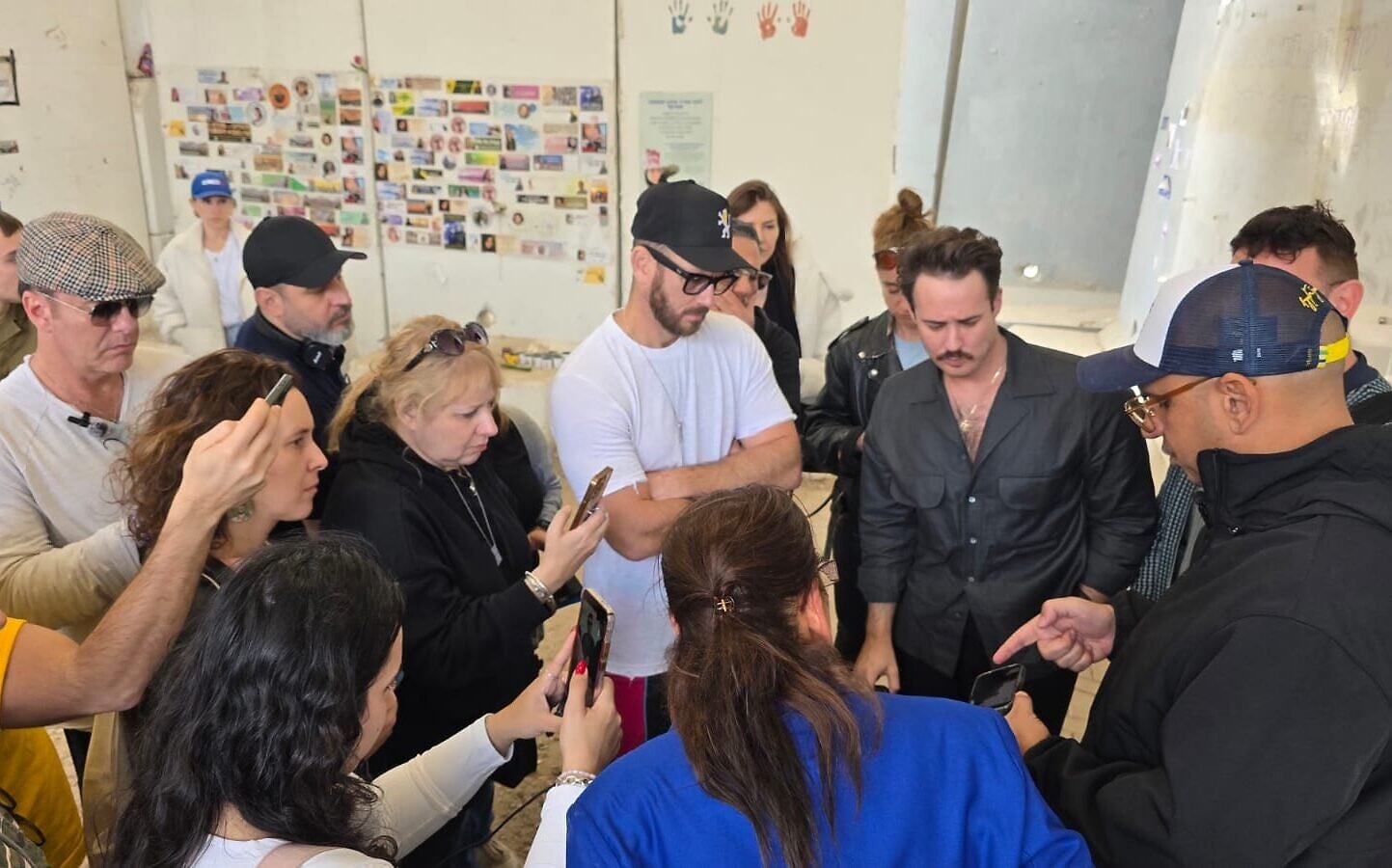
While Straus and other pro-Israel influencers like her get plenty of hateful comments online, many of those visiting Israel last week as part of the Israel Up Close delegation of influencers, organized by the Or Ofir Foundation, told The Times of Israel that the rewards of their work far outweigh the downsides.
Or Ofir is an organization working to help develop young Jewish leaders and strengthen connections between Israel and Diaspora communities. It is dedicated to fulfilling the life’s work of Ofir Libstein, an activist and community leader who was killed defending his home in Kibbutz Kfar Aza on October 7. The non-profit’s programs work to connect small Jewish communities around the world, empower elder members of kibbutzim around the Gaza Envelope, and provide leadership training programs, according to its executive director, Ofer Dahan.
“For this delegation, we tried to build a group that is very diverse, with influence in different areas,” Dahan said.
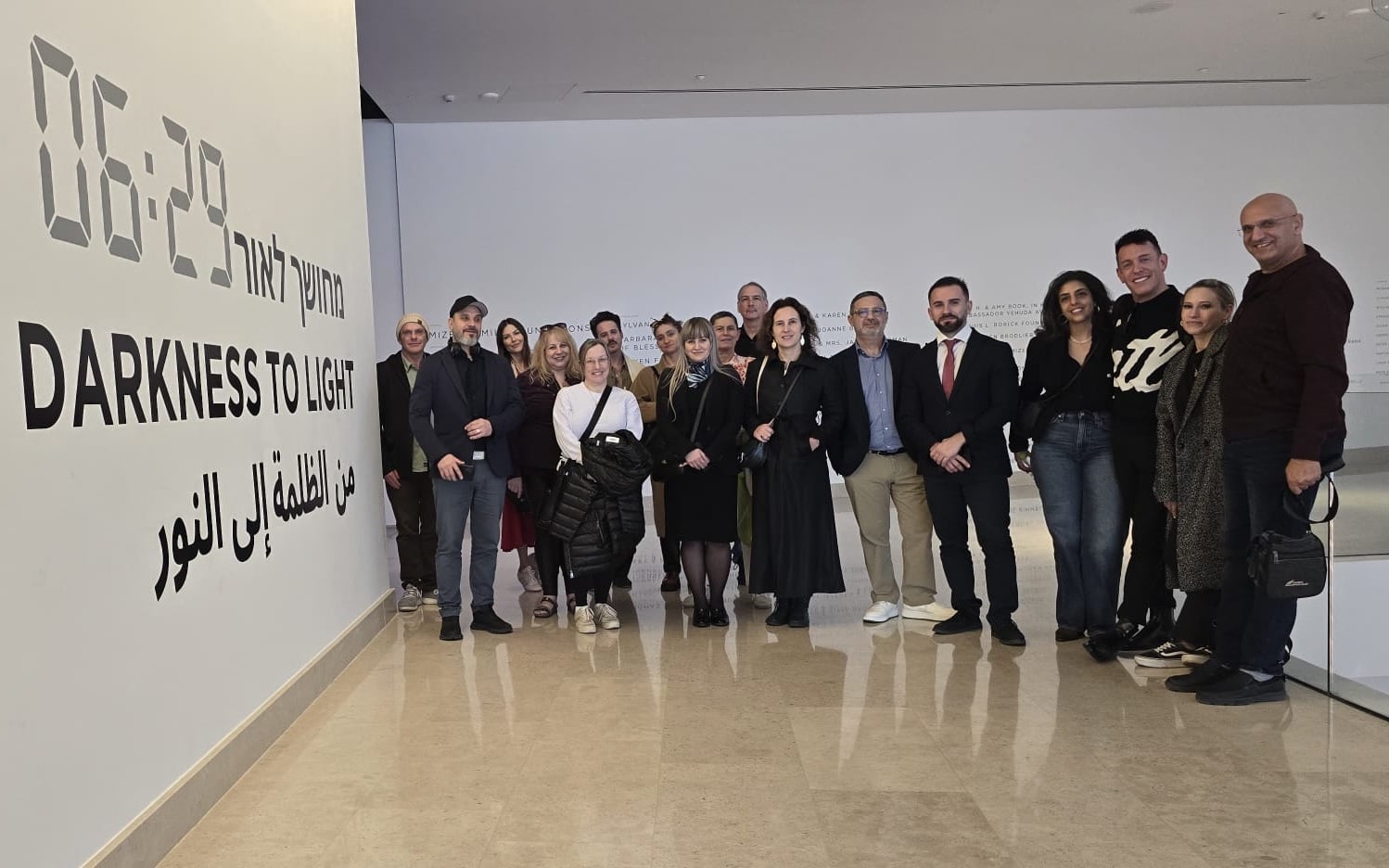
The delegation visiting this week is one of several organized with the Foreign Affairs Ministry in recent years to showcase Israel’s story for popular online personalities. Members of the trip spoke with The Times of Israel at Jerusalem’s Museum of Tolerance about their lifestyles and challenges of representing Israel to online audiences that aren’t always friendly.
Learning to ignore the haters
As a local authority on interior design, Shai DeLuca was already a television and social media personality in Toronto before October 7. Since then, though, the IDF veteran and activist has dedicated his public life to speaking about Israel.
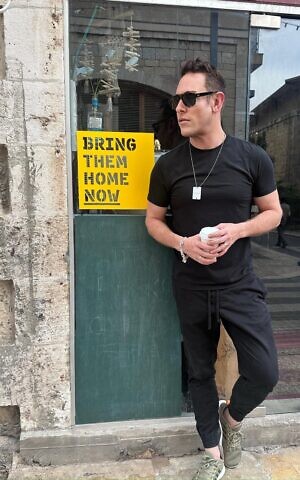
Today, he speaks frequently around Canada to audiences that include student groups and TV viewers. Security threats often require him to be accompanied by bodyguards to protect him at events, he said.
“It’s gotten really bad in the past couple of years, and the Canadian government does nothing to fight antisemitism,” he said.
Online, DeLuca posts several times a day to his social media audience of 100,000 — a figure he says is significant for Canada, where influencer reach is smaller. There, he faces even more harassment.
“I get so much hate online, and it’s beyond vile,” DeLuca said. “Before October 7, it was mainly what I would call ‘soft hate.’ Now, it’s pictures of gas chambers and messages like ‘Hitler should have killed you all.’”
DeLuca says he’s learned to usually ignore it.
“I used to spend hours fighting with people online, literally until the sun came up in the morning,” he recalled. “I learned very quickly that a lot of it is bots and that it’s not worthwhile to engage. Now, I only respond if I see there are other people watching who will learn from it.”
DeLuca estimated that only about 30% of the arguments he hears have any sort of factual or logical validity. The majority are just spewing misinformation, he said.
That being said, the benefits of speaking out far outweigh the risks, DeLuca said.
“My biggest joy is being able to go to a university where students are cowering and hiding their identities and watching them walk out of my talks feeling proud of who they are,” he said. “They go out knowing that they are standing for the truth.”
More love than hate
Strauss also said that the antisemitic comments she receives online got much more intense after October 7.
“It morphed quickly from general Jewish hatred to ‘genocide’ and ‘baby killer,’” she said. Now, she estimates she gets 20-30 hateful comments per day.
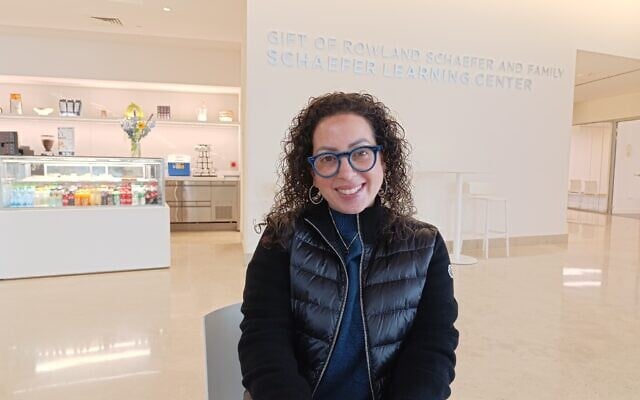
The author of the Eat Jewish cookbook, Strauss grew up in a Modern Orthodox home in Seattle, Washington, and now lives in New York with her family. She’s not formally trained as an educator, but as she found her online role expanding beyond Jewish food, she started teaching her audience members more about Judaism, Israel, and fighting antisemitism.
“I realized from my work on TikTok that we’re just a mystery to people,” she said. “People think everybody in Israel is Jewish, or that everyone keeps kosher. They don’t really understand that it’s such a huge mix. I try to humanize us by teaching through food, through the holidays, and by sharing my day-to-day life as a Jew.”
The abuse she receives online pales in comparison to the positivity she can share, Strauss said.
“People think supporting Israel online is all negative because the bullies are louder, but we get so much more support and so much love,” she said. “The positive comments always outweigh the negative ones, even when it doesn’t feel like it. That’s why I keep going. I love it.”

People trolling online are often going through issues of their own, said Michelle Blumenfeld, whose AntisemitismToday Instagram account has 112,000 followers.
Blumenfeld started her account during the COVID-19 pandemic after a number of misinformed comments about Jews and the Holocaust caught her attention. A self-described news junkie, she wanted to provide easily digestible tools to help people stay up to date on Jewish and Israeli news.
“I get hate comments all the time, but it doesn’t bother me,” she said. “Those trolls are like these little flies that just want attention for themselves. When you realize that they just want control, you can stop getting into these arguments that make you feel like trash. The hate comes with the territory. But I love what I do, and I’m just excited about all the people that come to me to learn.”
Empowering others
For Ben Freeman, the author of several books on Jewish identity and peoplehood, the key is to empower others to reclaim their Jewish identities rather than to confront hate directly.
“To me, the most important work in the Diaspora and in the Jewish world is increasing Jewish pride, empowering Jews to be literate in what it means to be Jewish, and to reject non-Jewish definitions of Jewish identity,” said Freeman, who came to fame with his 2021 book “Jewish Pride: Rebuilding a People.”

“My work isn’t about fighting Jew hatred, because that’s a problem for non-Jews, the same way homophobia is a problem for straight people,” Freeman said. “My work focuses on Jewish people and educating, inspiring and empowering Jews. I decided long ago never to let online haters make me feel bad about my Jewishness.”
Freeman aims to practice what he preaches. In October, shortly after a terror attack on Yom Kippur in Manchester killed two Jewish worshipers outside their synagogue, he penned a widely-read article pledging to leave the UK. He currently resides in Scotland and plans to move to Israel in the coming year.
“Life in London has become unbearable at times, and I don’t really feel that Jews have ever actually been accepted in Britain,” Freeman said. “It’s been conditional acceptance, and at the moment, it doesn’t even seem to be that. While I was born in the UK and I speak with a Scottish accent, I really feel that Israel is my home.”
Freeman is optimistic that others will follow his lead. “Jewish pride is now a slogan used all over the world,” he said. “It’s a statement of defiance and empowerment and reclamation. There are a lot of people fighting now, but there is still a long way to go.”
Shining through personal attacks
Australia’s Tali Shine, a conservative TV host, said her public profile has put her in the crosshairs of the culture wars over Israel, antisemitism and the future of Western values.
“I’ve been blessed to spend a lot of time speaking with conservative world leaders for my work, but I have gotten very violent threats on social media,” Shine said.

Australia’s 120,000-strong Jewish community has been among the hardest hit in the world since the October 7 attack. While Shine, who is also a wellness expert and book author, experienced personal attacks even before October 7, she said the Hamas attack was an event that clarified loyalties and exposed prejudices.
“I have a lot of friends who have turned on me,” she said. “On the flip side, though, there have also been wonderful allies and people who have become incredible supporters. The Jewish community in Australia has always been a close-knit society, and we’ve become even closer since October 7.”
The question of whether Australia remains a safe home for Jews is no longer rhetorical in Jewish circles, Shine said.
Speaking again to The Times of Israel this week after 15 people were killed and dozens wounded in a terror attack at a Hanukkah party at Bondi Beach in her home country, Shine said the attack shocked her, even as she and others in the community had complained about the failure of Australia’s government to address rising antisemitism since October 7.
“It’s just beyond horrific that this could have happened in once safe and peaceful Australia,” Shine said. “This is what the current government has allowed to come into our country and go unchecked. There may be a lot of Australian Jews moving to Israel soon.”
The post”Converging in the Holy Land, pro-Israel influencers brush off death threats and trolls” is auto generated by Nepalisrael.com’s Auto feed for the information purpose. [/gpt3]
